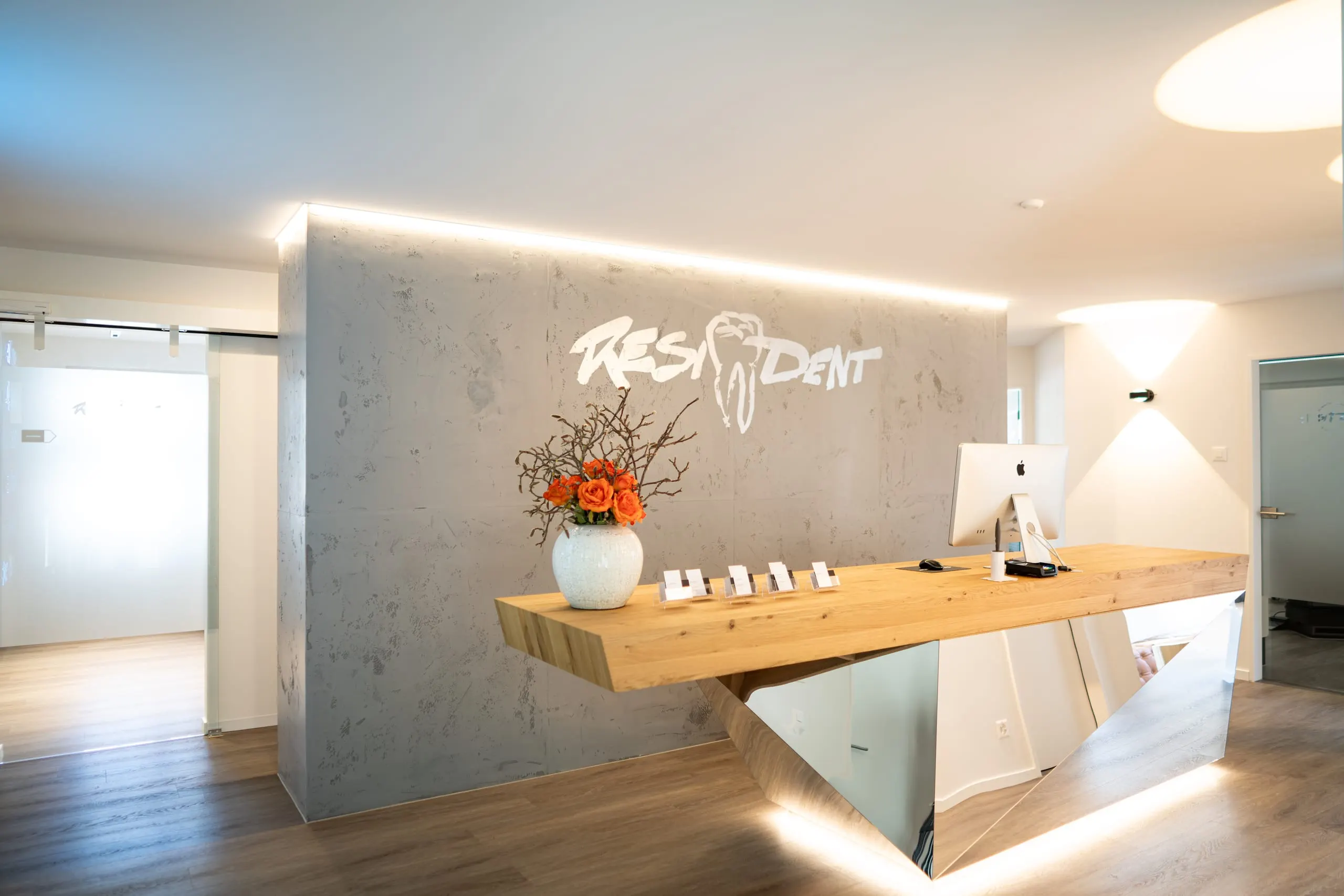
Resident Zahnarztpraxis

Endodontics

Your own tooth preserved.

Root canal treatments save teeth that would otherwise have to be extracted. We work with loupes, mechanical preparation and rubber dam.

Tooth Preservation At 6 locations

Book appointment Frequently asked

Dental hygiene reimbursable

Our qualified dental hygienists are listed in the Swiss register for experiential medicine (EMR). Many Swiss supplementary insurers require this entry for reimbursement. Whether and how much your insurer covers depends on your policy.

Values

How we work

  • With Microscope

    Surgical microscope and loupes make root canals precisely visible.

  • Mechanical Preparation

    Rotary nickel-titanium files clean root canals more efficiently than manual files.

  • Tooth Preservation First

    As long as the tooth is preservable, this takes priority over extraction with implant.

When a root canal becomes necessary

A root canal becomes necessary when the dental pulp is inflamed or has died. The most common cause is advanced caries that has reached the pulp. Other causes are trauma (for example after a fall), repeated deep restorations or a bacterial infection through the root tip.

Symptoms range from persistent throbbing pain through pressure sensitivity when biting to swelling at the gum. In some cases the pulp has already died and the tooth no longer hurts. These silent courses are not harmless: bacteria migrate through the root tip into the bone and can cause granulomas or abscesses there.

What we actually do

After local anesthesia we apply the rubber dam. This rubber protection isolates the tooth from saliva and prevents bacteria from entering the root canal during treatment. Without rubber dam a successful root canal treatment is not medically reliable.

Then we prepare the root canal mechanically with rotary nickel-titanium instruments. These instruments are more flexible than manual files and reliably reach even curved canal anatomies. We rinse with sodium hypochlorite and EDTA in parallel to completely remove bacteria and organic tissue.

After preparation we seal the canal bacteria-tight with thermoplastic gutta-percha. The tooth is then definitively restored, depending on residual tooth substance with a composite build-up filling, a post and core or a crown. This definitive restoration is medically imperative: A root-treated tooth without stable restoration fractures within months to years.

When the first root canal treatment fails

In about five to ten percent of cases, a renewed inflammation develops years after a root canal treatment. Most common cause: an anatomically complex canal that was not completely captured in the first treatment, or subsequent bacterial intrusion through a leaking restoration.

In these cases a revision treatment is possible: removal of the existing root filling material, renewed preparation with microscope, new closure. For complex revisions we work with an endodontist from the Resident network.

If a revision is not promising, apicoectomy remains as surgical alternative or extraction with subsequent implant restoration. We make the decision not alone, but together with you.

Protocol

Three steps

  1. 01 · Diagnostics

    Clinical examination, X-ray, vitality test. With complex anatomy additionally CBCT scan.

  2. 02 · Preparation

    Applying rubber dam, access to root canal, mechanical cleaning and antibacterial rinsing.

  3. 03 · Closure

    Bacteria-tight closure with thermoplastic gutta-percha and definitive build-up with composite or crown.

Resident Dental Practice

Frequently asked

Frequently asked

Does a root canal treatment hurt?

With modern anesthesia the actual treatment is painless. An existing inflammation can however reduce the effect of anesthesia. In these cases we work with additional intraligamentary anesthesia. After the session the tooth can be sensitive to pressure for one to three days.

How high is the success rate?

When performed properly with microscope and rubber dam, the success rate in studies is over 90 percent. Prerequisite is timely definitive restoration with crown or build-up. A root-treated tooth without tight closure fractures with high probability within two years.

What does a root canal treatment cost?

We bill according to SSO tariff. Costs depend on number of roots, anatomy and time effort. You receive a written cost estimate before treatment begins. The crown or definitive restoration comes additionally and is shown separately.

Is a root canal worthwhile or better an implant?

Preserving your own tooth takes priority from a dental perspective in most cases. Your own root complex and intact bone are not replaceable. An implant is a very good second choice, but not a better first. We discuss the decision individually based on findings.
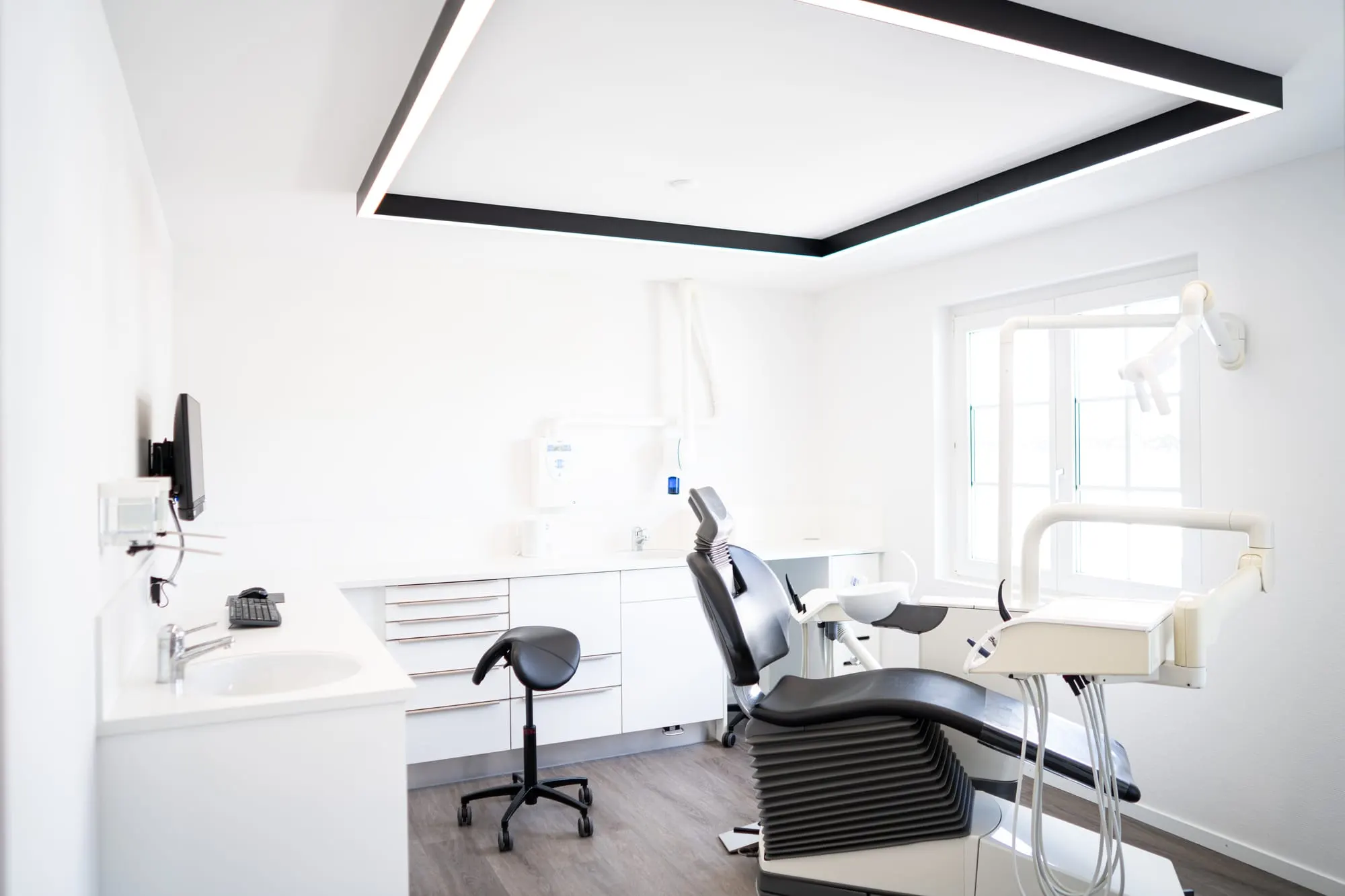
From our practice rooms

Your own tooth is the best restoration.

From our practice rooms

Related reading

More on this topic

  1. Oral Surgery

    Apicoectomy: When it saves the tooth

    When inflammation persists at the root tip despite a root canal, a small surgical procedure can save the tooth. We explain when an apicoectomy makes sense, how it works and how high the success rates are.

    8 min read
  2. Insurance

    The written cost estimate: What is in it and what it is good for

    A cost estimate is a written treatment plan with detailed listing of all planned services, materials and tariff positions. Resident prepares it before every larger treatment. You can submit it to your insurance or use it as a decision basis.

    5 min read
  3. Anesthesia

    Local anesthesia, nitrous oxide or general anesthesia: Which form for which treatment

    Most dental treatments are performed under local anesthesia. Nitrous oxide supplements local anesthesia and reduces anxiety without deep sleep. Twilight sleep and general anesthesia are options for complex procedures or pronounced dental anxiety. The choice depends on procedure scope, anxiety level and medical situation.

    11 min read
  4. Insurance

    What health insurance covers at the dentist: And what not

    Swiss basic insurance covers dental treatments only in narrowly defined exceptional cases. Routine dental care is a self-pay matter but can be covered through supplementary insurance with dental care module. This article explains the system and shows how you proceed specifically.

    8 min read
  5. Prosthetics

    Implant or bridge: Which tooth replacement for which case

    Three options for a lost tooth. Implant is the long-term most stable solution, bridge can be sensible in specific constellations, denture as a cost-effective option or with medical contraindications. The right choice depends on bone situation, neighboring teeth, number of missing teeth and individual preferences.

    11 min read
  6. Insurance

    What does a root canal treatment cost in Switzerland?

    A root canal treatment in Switzerland costs between CHF 600 and 2,000 depending on number of roots and anatomy, without the definitive restoration with crown or build-up. Costs vary strongly by tooth position, canal complexity and whether it is a primary treatment or a revision. This article explains the cost structure and the main variability factors.

    8 min read

Available at

Available at these locations

Appointment

Not sure what the right step is?

In a first consultation we clarify findings, options and costs. Calmly, without rushing. Book online or call during opening hours.

Book appointment View locations

Online around the clock. By phone during opening hours.